
If you are planning a shopping plaza, mall, hospital or office building in Karachi, Lahore or Islamabad, one early question is whether it needs elevators, escalators or both. They solve different problems, take up very different amounts of space and suit different visitors. This guide compares the two in plain terms, with the points our engineers check during a site survey.
Quick answer
Choose an escalator to move large crowds a short distance, usually between 2 to 4 busy floors of a mall or plaza, with no waiting. Choose an elevator (lift) for buildings with more floors and wherever wheelchair users, the elderly, trolleys or goods must travel. Almost every commercial building in Pakistan that has escalators still needs at least one passenger lift, and malls usually add a goods lift as well.
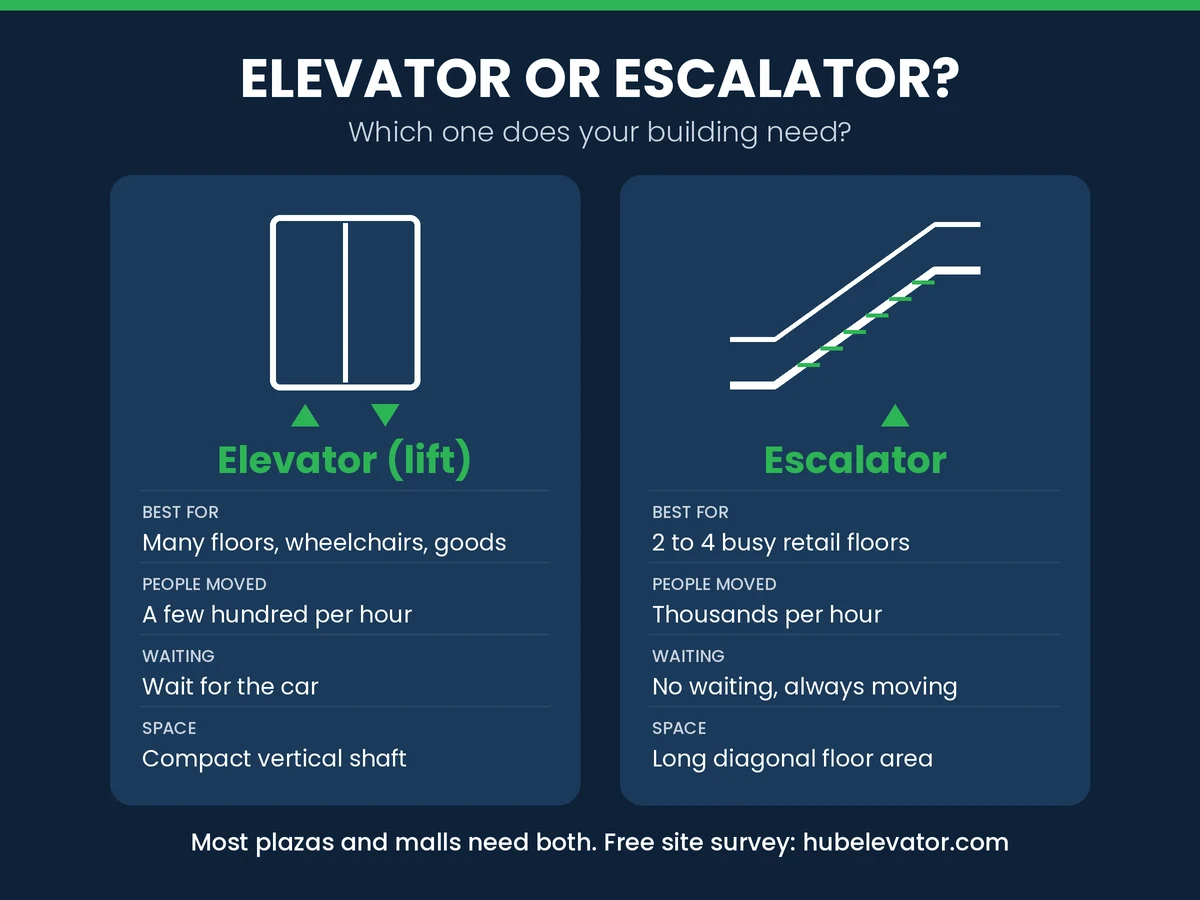
Elevator vs escalator at a glance
| Point | Elevator (lift) | Escalator |
|---|---|---|
| How it moves | A car travels up and down a vertical shaft and stops at each floor | A continuous moving staircase on a fixed incline between two levels |
| Typical speed | About 1 to 1.75 m/s in low and mid-rise commercial buildings; home lifts are slower | About 0.5 m/s, sometimes up to 0.75 m/s |
| People moved per hour | A few hundred per lift, depending on car size and floors served | Thousands per unit (a 1,000 mm escalator is rated at up to 9,000 people per hour at 0.5 m/s) |
| Waiting | Passengers wait for the car | No waiting, always moving |
| Floors served | Any number, from 2 floors to high-rise | One floor per unit; units are stacked for more floors |
| Floor space | Compact vertical shaft, roughly 2 m × 2 m for an 8-person lift | Long footprint, around 11 to 13 m of floor length for a typical 4.5 m floor height |
| Wheelchairs, prams, trolleys | Yes | No, not safely |
| Goods | Yes, with a cargo or service lift | No |
| Power use | Mainly while moving | Runs continuously unless it has auto start and stop |
| Typical buildings | Apartments, offices, hospitals, hotels, high-rise towers, factories | Malls, shopping plazas, stations, airports, large showrooms |
When an escalator is the right choice
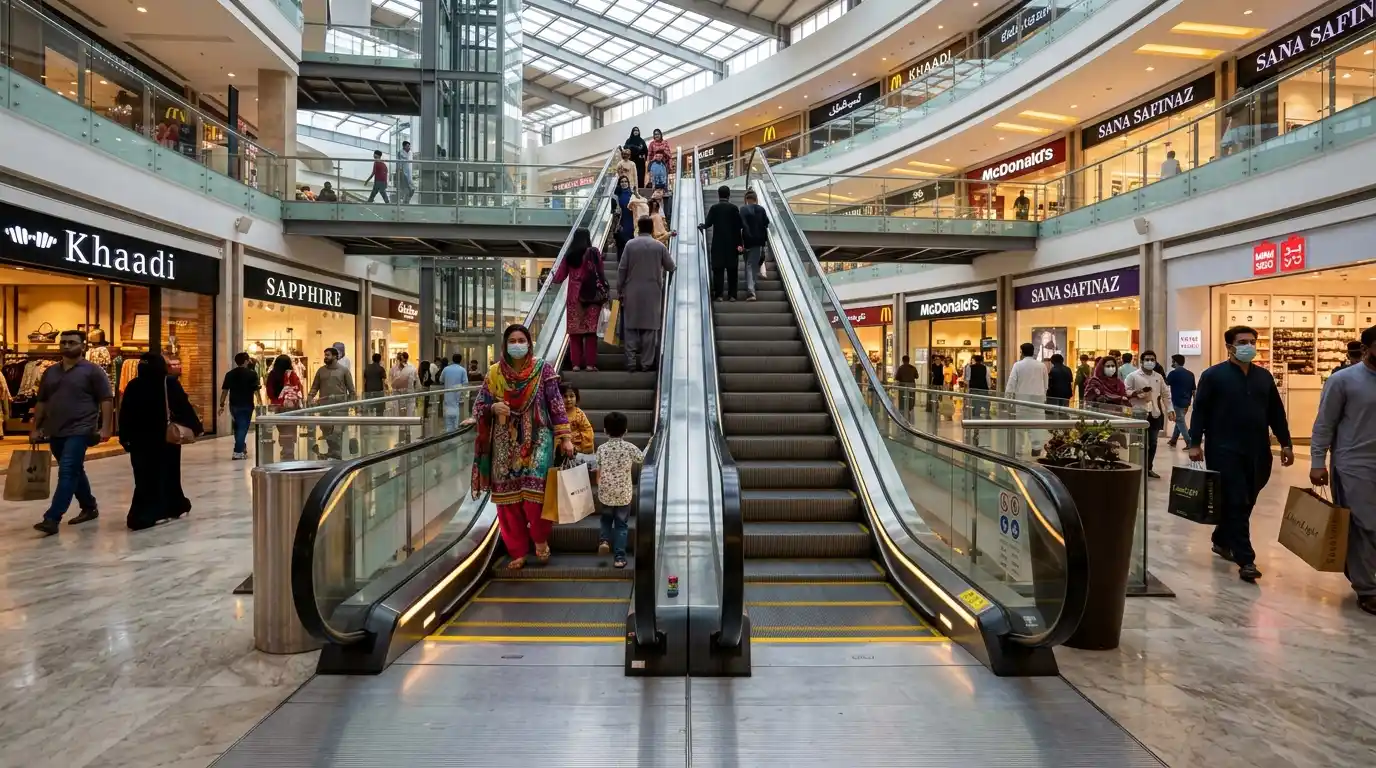
- Heavy footfall over a short rise: ground to first and second floors of malls and shopping plazas, where hundreds of people arrive at once on weekends, during Eid shopping and sale seasons.
- Retail browsing: shoppers see each floor as they ride, which brings footfall to upper-floor shops. Food courts and anchor stores are often placed where escalators arrive for this reason.
- Transit buildings: metro, railway and bus terminals and airports, where people move in one direction in large groups.
- Fixed travel between two levels with no waiting at all.
Escalators work best for up to about four floors in a row. Beyond that, riding several escalators takes too long and most visitors switch to lifts. For step widths, inclines and placement inside a retail floor plan, see our escalator planning guide for malls and retail and our escalator installation service.
When an elevator (lift) is the right choice
- More than four floors: offices, apartments, hotels, hospitals and high-rise towers. See how many lifts an apartment building needs.
- Accessibility: wheelchair users, the elderly, patients, parents with prams and shoppers with trolleys.
- Goods and service: stock, furniture, food trolleys and waste should travel in a cargo or service lift, not with customers.
- Basement parking: lifts connect parking levels to the shopping or office floors.
- Limited floor area: a lift shaft takes far less floor space than an escalator run.
For offices, apartments and plazas, start with our passenger lift options.
Not sure which your building needs?
Send us the building type, number of floors and expected footfall. Our engineers will suggest the right mix of lifts and escalators and arrange a free site survey.
Why most plazas and malls in Pakistan need both
A typical new mall or plaza uses escalators for the busy retail floors, passenger lifts for the upper floors, parking and accessibility, and a separate goods lift so stock does not travel with shoppers. Plan them together at the design stage: the escalator openings, lift shafts and pits must be fixed before the structure is built, and changing them later is expensive. The table below is a starting point; the final number of units comes from the floor areas and expected footfall.
| Building type | Usual mix |
|---|---|
| Shopping plaza, 3 to 5 floors | Escalators between the main retail floors, at least one passenger lift, and a goods lift |
| Large mall | Escalators at each atrium, a group of passenger lifts near parking, and service or goods lifts |
| Office building | Passenger lifts sized to floors and occupants; an escalator only for a lobby to mezzanine link |
| Hospital | Bed and stretcher lifts plus passenger lifts; escalators are optional in busy outpatient areas |
| Apartment building | Passenger lifts only |
| Factory or warehouse | Cargo lifts |
| Station or terminal | Escalators for the main flow plus lifts for step-free access |
For Karachi projects, our guide to lifts for commercial buildings in Karachi covers plazas, offices and mixed-use towers in more detail.
Space and structure to plan before construction
- Escalator: needs a floor opening along its whole length, a pit at the lower landing and support points at both ends. The incline is usually 30°; 35° is allowed only for rises up to 6 m under the EN 115 safety standard. Common step widths are 600, 800 and 1,000 mm.
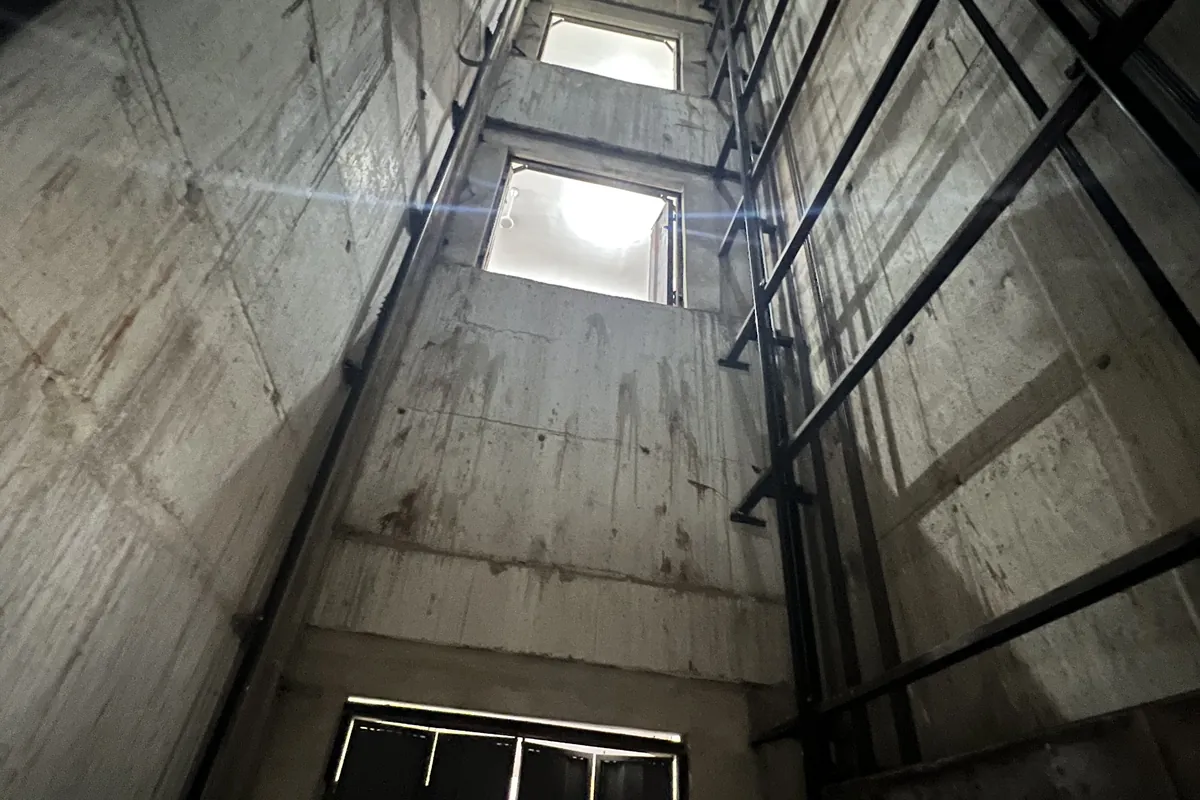
- Elevator: needs a vertical shaft, a pit at the bottom and clear headroom at the top. A machine-room-less lift avoids a separate machine room on the roof; see lifts without a machine room. For car and shaft sizes, see our elevator dimensions guide.
- Share drawings early: give your lift company the architectural drawings before the slab and column layout is final.
Cost factors (PKR estimates)
Every project is priced after a site survey, so treat these figures as estimates, not quotations.
- Passenger lift: approx. PKR 25 lakh to 80 lakh per lift, depending on floors, capacity, speed and brand. See the full elevator price guide for Pakistan.
- Escalator: built to order. The price depends on the rise (floor-to-floor height), step width, indoor or outdoor duty, finishes, import costs and the exchange rate, so we give a written estimate after the survey.
- Running costs: lift maintenance (AMC) is approx. PKR 12,000 to 40,000 a month depending on the lift; see lift maintenance in Karachi. Escalators also need monthly maintenance of steps, combs, handrails and safety devices.
Safety and power in Pakistani conditions
- Load shedding: fit lifts with an automatic rescue device (ARD) that brings the car to the nearest floor and opens the doors when power fails, and plan backup power for key lifts. Read lift backup options for load shedding.
- Dust and heat: both need regular cleaning of steps, combs and door tracks. Escalators that are open to the weather need an outdoor-rated design.
- Fire: neither lifts nor escalators replace the fire exit stairs. Lifts with a fire service mode return to the ground floor when the fire alarm is triggered.
- Children on escalators: skirt brushes, emergency stop buttons, clear signs and supervision reduce the risk of trapped shoes and falls.
How Hub Elevator can help
Hub Elevator supplies, installs and maintains passenger lifts, cargo lifts and escalators across Pakistan, with offices in Karachi and Lahore. We visit the site, look at the floors, the drawings and the expected footfall, and recommend the mix of lifts and escalators that fits the building and the budget. Find us in Karachi, Lahore and Islamabad, or contact us for a free survey.
Frequently asked questions
What is the main difference between an elevator and an escalator?
An elevator (lift) is a car that travels up and down a vertical shaft and can serve any number of floors. An escalator is a moving staircase on a fixed incline that links two levels and moves people continuously, so nobody waits. Elevators carry fewer people per hour but reach more floors and carry wheelchairs and goods; escalators move large crowds over a short rise.
Which is better for a shopping plaza in Pakistan, a lift or an escalator?
Most busy plazas and malls need both. Escalators handle the crowd between the main retail floors, while at least one passenger lift is still needed for upper floors, basement parking, wheelchair users and the elderly, and a goods lift keeps stock away from shoppers. The right mix depends on the number of floors and expected footfall, which is assessed in a site survey.
Can an escalator replace a lift for wheelchair users?
No. Wheelchairs, prams and shopping trolleys cannot use an escalator safely, so a building with escalators still needs a lift for step-free access.
How many people can an escalator carry per hour?
At the usual speed of 0.5 m/s, escalators are rated at up to about 4,500 people per hour for a 600 mm step, 6,750 for 800 mm and 9,000 for 1,000 mm. Real flow is lower because people leave gaps, but it is still many times what a single lift can carry.
Which uses more electricity, a lift or an escalator?
An escalator runs all day, so its daily power use is usually higher than a lift serving the same floors, unless it has an automatic start and stop or slow standby mode. A lift draws most of its power only while it is moving.
How much does a passenger lift cost compared with an escalator in Pakistan?
A standard passenger lift is approx. PKR 25 lakh to 80 lakh per lift, depending on floors, capacity, speed and brand. Escalators are built to order for each building, so Hub Elevator gives a written escalator estimate after a free site survey. These are estimates, not quotations.
Planning a plaza, mall or office building?
Tell us the city, the number of floors and how many visitors you expect. We will recommend lifts, escalators or both and share a written estimate after a free site survey.