
High rise elevator installation Pakistan projects fail or succeed at design stage, not on site. Once the core is poured, shaft dimensions, zoning and machine-room provision are fixed, and every compromise after that costs money. This guide covers what has to be decided before the structure goes up.
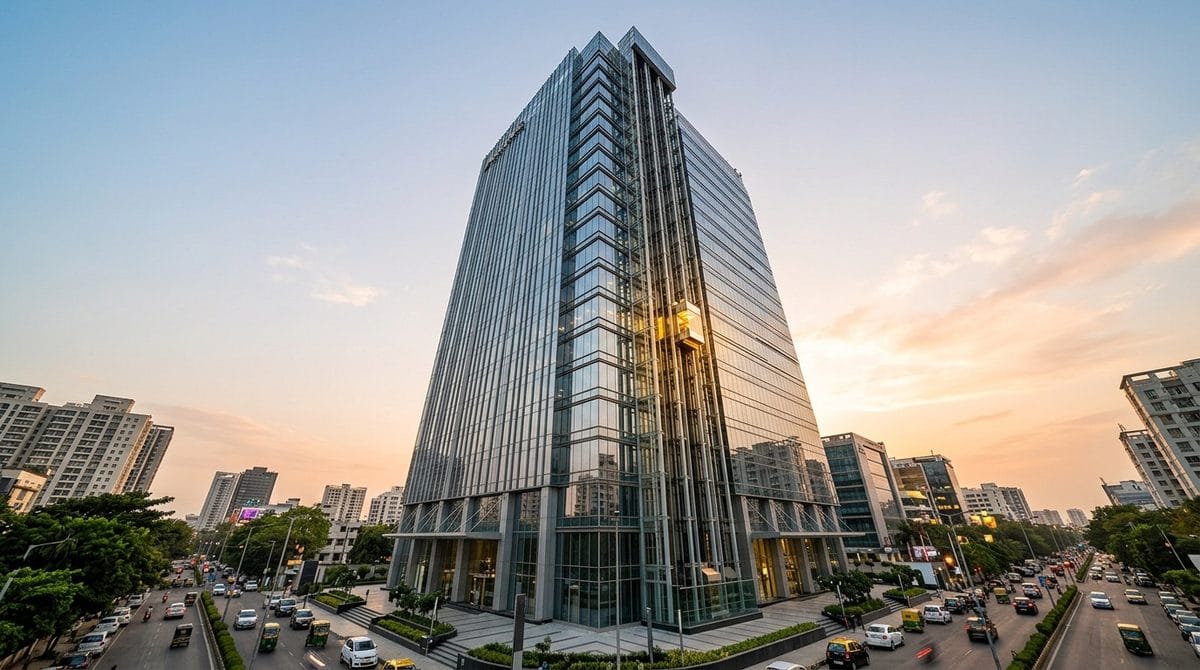
Pakistan is undergoing a vertical revolution. The 62-storey Bahria Icon Tower in Karachi, standing at approximately 300 meters (984 feet)—has long held the title of the country’s tallest building, serviced by 16 high-speed elevators including the region’s first double-decker elevators. But the skyline is about to get even more ambitious.
In May 2026, an agreement was signed between DHA City Karachi and ABS Developers for Burj-e-Quaid, an 82-storey skyscraper standing 941 feet tall—destined to become Pakistan’s tallest building upon completion. Meanwhile, Islamabad’s New Blue Area is set to host a landmark tower designed by global architectural firm Aedas, signaling a transformative moment for Pakistan’s real estate sector.
For developers, structural engineers, and architects working on these mega-projects, one question looms large: How do you move thousands of people efficiently, safely, and comfortably through a tower that scrapes the sky?
High-rise elevator installation is not merely a mechanical exercise—it is the circulatory system of the entire building. Get it wrong, and your 40-storey commercial tower becomes a vertical traffic jam. Get it right, and you create a seamless experience that enhances property value, tenant satisfaction, and operational efficiency.
Over my 25 years in this industry, I have seen the engineering landscape transform. Today’s high-rise elevator systems are marvels of precision engineering, integrating artificial intelligence, regenerative energy systems, and safety protocols that would have seemed like science fiction a generation ago.
This guide explores the critical engineering considerations for high-rise lift installation in Pakistan—from speed and capacity calculations to destination dispatch technology, safety systems, and the unique challenges of our local environment.
Engineering Challenges in High-Rise Vertical Transport
Designing an elevator system for a building exceeding 20 stories introduces complexities that simply don’t exist in low- or mid-rise structures. Here are the core engineering challenges:
Rope Weight and Travel Distance
In a tall building, the weight of the steel ropes themselves becomes a significant design limitation. For a 300-meter tower like Bahria Icon Tower, the suspension ropes can weigh several tons. Engineers must account for this dead weight in motor sizing, brake capacity, and energy consumption calculations. Modern solutions include polyurethane-coated flat ropes and emerging fiber rope technology, which are significantly lighter than conventional steel ropes and reduce machine loading.
Rope Sway and Building Movement
High-rise buildings sway—sometimes significantly—in high winds or during seismic events. This movement can cause elevator ropes to sway, leading to potential contact with hoistway walls, increased wear, and passenger discomfort. Advanced dampening systems and guide rail configurations are essential to mitigate these effects.
Traffic Peaking
In a commercial high-rise, the morning “up-peak” (when thousands of employees arrive simultaneously) creates intense demand. In a residential tower, the evening “down-peak” presents similar challenges. The elevator system must be designed to handle these traffic spikes without unacceptable waiting times.
Pressure Differentials
As elevators travel at high speeds through tall shafts, air pressure changes can cause discomfort to passengers’ ears. Modern high-speed elevators incorporate pressure regulation systems to ensure a comfortable ride.
Speed, Capacity, and Shaft Design: Getting the Numbers Right
Sizing is where most high rise elevator installation Pakistan projects go wrong. Speed follows travel height, and both pit depth and headroom grow with it, so these numbers must be agreed before the shaft is cast.
Speed Requirements by Building Height
Not every high-rise needs the same speed. The relationship between building height and required elevator speed is governed by round trip time (RTT) calculations—the time it takes for an elevator to complete a full cycle from the lobby to the highest floor and back.
Here is a practical reference guide for Pakistani developers:
| Building Height | Recommended Speed | Typical Application |
|---|---|---|
| 12–20 stories | 1.6 – 2.5 m/s | Mid-rise commercial, residential towers |
| 20–30 stories | 2.5 – 4.0 m/s | High-rise office buildings, hotels |
| 30–40+ stories | 4.0 – 6.0 m/s | Skyscrapers, mixed-use towers |
| Super-tall (62+ stories) | 6.0 – 10.0 m/s | Icon towers, landmark projects |
For context, the Schindler 7000 high-rise elevator supports travel speeds up to 6 m/s with loads up to 2,500 kg. The KONE High-Rise MiniSpace DX can achieve speeds up to 10 m/s with travel distances up to 640 meters. These are the benchmarks against which world-class high-rise projects are measured.
How Many Elevators Does a 20-Story Building Need?
This is the most common question I receive from developers. The answer depends on traffic analysis—a science that considers building population, peak-hour demand, and acceptable waiting times.
The industry standard calculation uses the handling capacity (HC) formula:
HC = 300P / RTT
Where:
- P = number of passengers per elevator car
- RTT = round trip time in seconds
- 300 = the number of seconds in a 5-minute peak period
Handling capacity is expressed as the percentage of the building population that can be transported in five minutes. Industry best practice targets a handling capacity of at least 12–15% with an average waiting time not exceeding 30 seconds—and ideally under 25 seconds for premium commercial buildings.
Real-world example: Karachi’s Dolmen City project’s Harbour Front—a 20-story office building—is served by six elevators with 1,350 kg capacity traveling at 150 meters per minute. This configuration reflects careful traffic analysis to meet the demands of a busy commercial tower.
Shaft Design Considerations
Shaft design is where engineering meets architecture. Key considerations include:
- Shaft footprint: Each elevator shaft consumes valuable floor space. In premium locations like Karachi’s Clifton or Islamabad’s Blue Area, every square foot counts. Machine Room-Less (MRL) designs eliminate the need for a separate machine room, with traction machines and controllers installed inside the hoistway itself. This can save up to 70% of electricity consumption compared to hydraulic elevators and frees up significant leasable space.
- Hoistway zoning: For very tall buildings, elevators are often divided into zones—low-rise, mid-rise, and high-rise banks—with sky lobbies serving as transfer points. This reduces RTT and improves overall system efficiency.
- Future-proofing: Shafts should be designed with sufficient space for potential modernization or capacity upgrades. The building may stand for 50+ years; the elevator system should be able to evolve.
Destination Dispatch: The Intelligence Behind Modern Vertical Transport
Gone are the days when pressing “up” or “down” was the height of elevator technology. For high-rise buildings, Destination Dispatch Systems (DDS) have become the industry standard.
How It Works
Instead of simply calling an elevator to the lobby, passengers select their destination floor at a terminal before boarding. The system’s artificial intelligence then:
- Groups passengers heading to the same or nearby floors
- Assigns them to the optimal elevator to minimize stops
- Reduces crowding by distributing passengers across the elevator bank
The Benefits Are Substantial
- Up to 25% shorter ride times
- Up to 30% increase in elevator handling capacity compared to conventional systems
- Reduced energy consumption by minimizing unnecessary cab starts and stops
- Improved security with access control integration
Systems like TK Elevator’s AGILE Destination Controls are fully customizable, supporting smartphone-enabled elevator calls, touchless operation, and multimedia displays. For Pakistani developers competing in premium markets, this technology is no longer optional—it is expected.
Safety Systems for Tall Buildings: Earthquake, Fire, and Power Backup
Any high rise elevator installation Pakistan specification should treat seismic detection, firefighter recall and an automatic rescue device as mandatory rather than optional extras, particularly given routine load-shedding.
Safety is non-negotiable. Pakistan’s Building Code—specifically the Fire Safety Provisions 2016—mandates specific requirements for high-rise elevators.
Fire Safety
- All elevators must be equipped to operate with a standardized fire service elevator key
- Fire service access elevators must be located in shaft enclosures complying with the Building Code
- Automatic sprinkler systems are required throughout
- Emergency evacuation protocols must be established, with fire alarms and emergency exits mandated for all high-rise buildings
Earthquake Resilience
Pakistan sits in a seismically active region. High-rise elevator systems must incorporate:
- Seismic sensors that trigger emergency stops during tremors
- Guide rail systems designed to accommodate building sway
- Rope dampening systems to prevent entanglement during seismic events
Power Backup
Power fluctuations are a reality in Pakistan. Every high-rise elevator system must include:
- Automatic transfer switches to backup power generators
- Battery-backed emergency lighting and alarms in every cab
- Emergency communication systems (phones/intercoms) in each elevator
Compliance Standards
All equipment and installation practices should comply with international standards including ISO 9001 and relevant EN standards for lift systems. At Hub Elevator, we ensure every installation meets or exceeds these requirements.
Why Hub Elevator Is Equipped for High-Rise Projects
We have delivered high rise elevator installation Pakistan work for towers, hospitals and institutional clients since 1970, including projects up to 40 storeys.
With 25 years of engineering heritage as a subsidiary of Haji Hameed Engineers, Hub Elevator brings deep local knowledge combined with global technical expertise. Here is what sets us apart for high-rise projects:
Technical Capability
We partner with world-class manufacturers including FUJI, Mitsubishi, and Hyundai to deliver high-speed, gearless traction systems capable of serving buildings from 12 to 40+ stories. Our gearless traction technology delivers:
- Higher energy efficiency
- Reduced space requirements
- Lower maintenance requirements and longer service life
- Smoother and quieter operation
Local Knowledge, Global Standards
We understand the unique challenges of the Pakistani market—from the dusty winds of interior Sindh to the coastal humidity of Karachi, from the seismic considerations of the north to the power fluctuations that plague our grid. Our engineers design systems that thrive in these conditions.
Comprehensive Service
From traffic analysis and system design through installation, commissioning, and ongoing maintenance, we provide end-to-end support. Our nationwide service network ensures that your high-rise investment remains protected for decades.
Proven Track Record
We have delivered elevator solutions for some of Pakistan’s most respected organizations—including PSO, the State Bank of Pakistan, Caltex, Imtiaz, and Culligan Water—demonstrating our capability to meet the demands of large-scale, mission-critical installations.
Conclusion: Planning High Rise Elevator Installation Pakistan Projects Properly
The skylines of Karachi, Lahore, and Islamabad are transforming. Burj-e-Quaid, the New Blue Area tower, and countless other high-rise projects are not just buildings—they are statements of Pakistan’s economic ambition and engineering capability.
As developers, architects, and engineers, you have a responsibility to get vertical transportation right. The elevator system you choose today will define the user experience, operational efficiency, and long-term value of your project for generations.
Hub Elevator has the technical expertise, local knowledge, and global partnerships to deliver world-class high-rise elevator solutions. Whether you are planning a 12-story commercial tower or a 40-story mixed-use development, we are ready to be your partner.
Let’s build Pakistan’s vertical future—together.
Related reading
- Start with the complete guide to passenger elevators in Pakistan for capacity and shaft sizing.
- Check standard lift shaft, cab and door dimensions before finalising the core.
- Compare manufacturers in our guide to the best elevator brands in Pakistan.
- Understand what drives elevator price in Pakistan and what an AMC should cover.
- See our high-rise lift installation services and passenger elevator services.
Frequently Asked Questions (FAQs)
What speed do high-rise elevators typically run at?
For buildings up to 20 stories, speeds of 1.6–2.5 m/s are typical. For 20–30 story buildings, 2.5–4.0 m/s is standard. For 30–40+ story towers, speeds range from 4.0–6.0 m/s. Super-tall projects (62+ stories) may require speeds up to 10 m/s.
How many elevators does a 20-story building need?
There is no single answer—it depends on building population, peak-hour demand, and acceptable waiting times. Traffic analysis calculates the required handling capacity. As a reference, Karachi’s 20-story Dolmen City Harbour Front uses six elevators with 1,350 kg capacity.
What is destination dispatch technology?
Destination Dispatch is an intelligent elevator control system where passengers select their destination floor at a terminal before boarding. The system groups passengers heading to nearby floors and assigns them to the optimal elevator, reducing wait times by up to 25% and increasing handling capacity by up to 30%.
What safety features are required for high-rise elevators in Pakistan?
Pakistani building codes require fire service elevator keys, sprinkler systems, emergency lighting and alarms, emergency communication systems, and compliance with ISO 9001 and EN standards. Earthquake resilience and backup power systems are also essential for tall buildings.